Headlight Restoration
Improve the visibility and looks of your headlights.
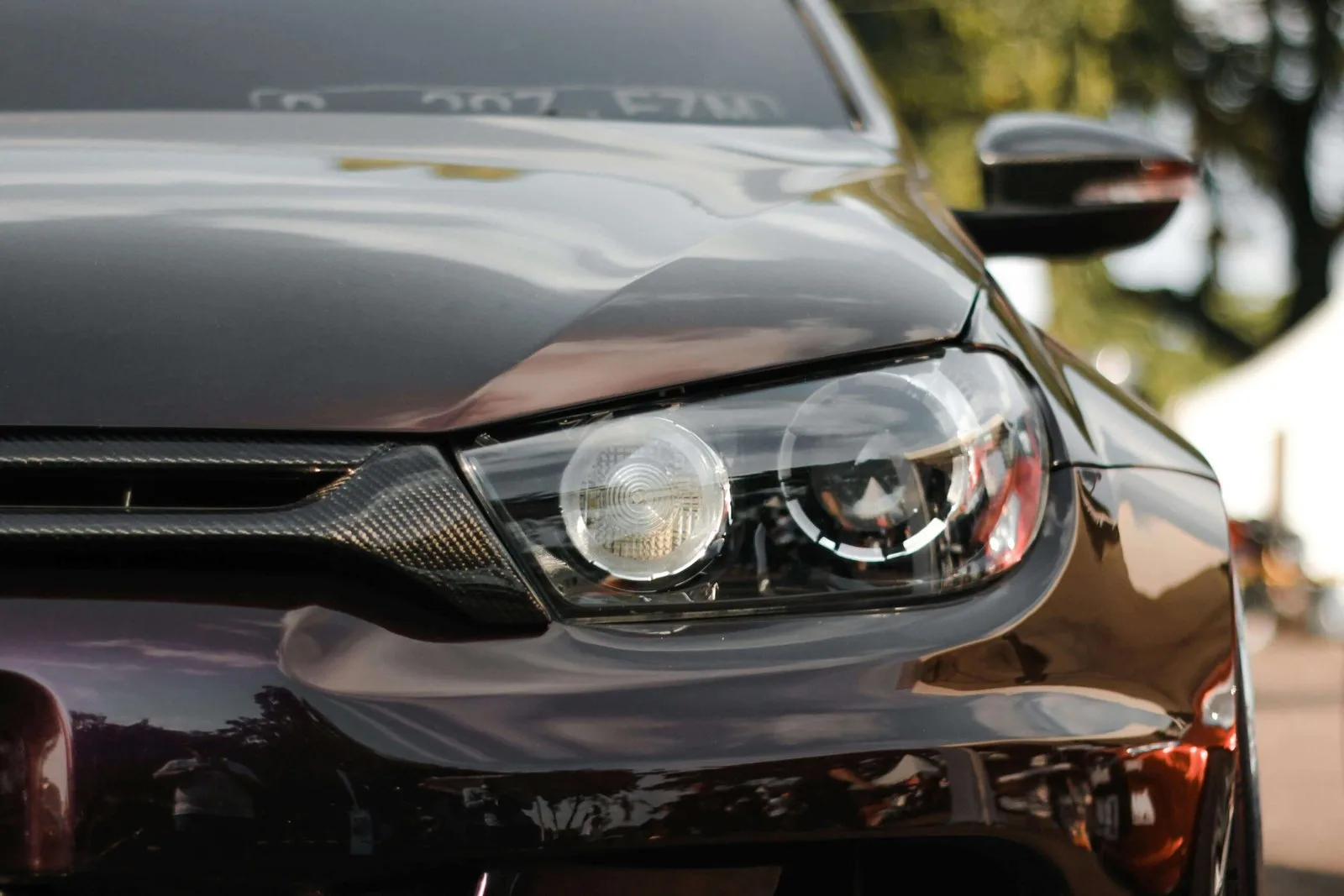
Cloudy, yellowed or scratched headlight lenses let through significantly less light and scatter the beam — the road is lit worse, even though the bulbs themselves work perfectly.
Restoring the lenses brings that back, for a fraction of the cost of a new headlight, which on many modern vehicles runs into several hundred euros.
When restoration makes sense — and when it doesn't
Restoration helps when the problem is on the surface of the lens:
- the lens is cloudy, milky or yellowed
- there are fine scratches and sand marks on the lens
- the lights seem weaker despite new bulbs
Restoration doesn't help when the problem runs deeper:
- the lens is cracked or broken
- there's moisture or condensation inside the headlight
- the internal reflector is damaged or flaking
- the headlight housing is broken
In the second case, the headlight needs to be replaced. At the inspection we'll tell you honestly which group you're in — we won't sell you a restoration that won't help.
Why headlights become cloudy in the first place
The lenses on modern headlights are made of polycarbonate, not glass. They're protected by a thin UV coating that wears away over time. Once it fails, sunlight starts breaking down the plastic underneath — the lens yellows and turns cloudy.
This happens faster on the coast than further inland: more sun over the year, stronger UV in summer, plus salty air and sand. That's why vehicles of the same age here often show cloudy lenses sooner than they would in inland Slovenia.
Repair carried out with quality and professionalism.Marino Schiulaz, Google review
// the restoration process
How restoration works
-
01
Inspection
We determine whether it's surface wear or damage that requires replacement.
-
02
Protecting the surroundings
We mask off the paint and seals around the headlight so sanding doesn't damage them.
-
03
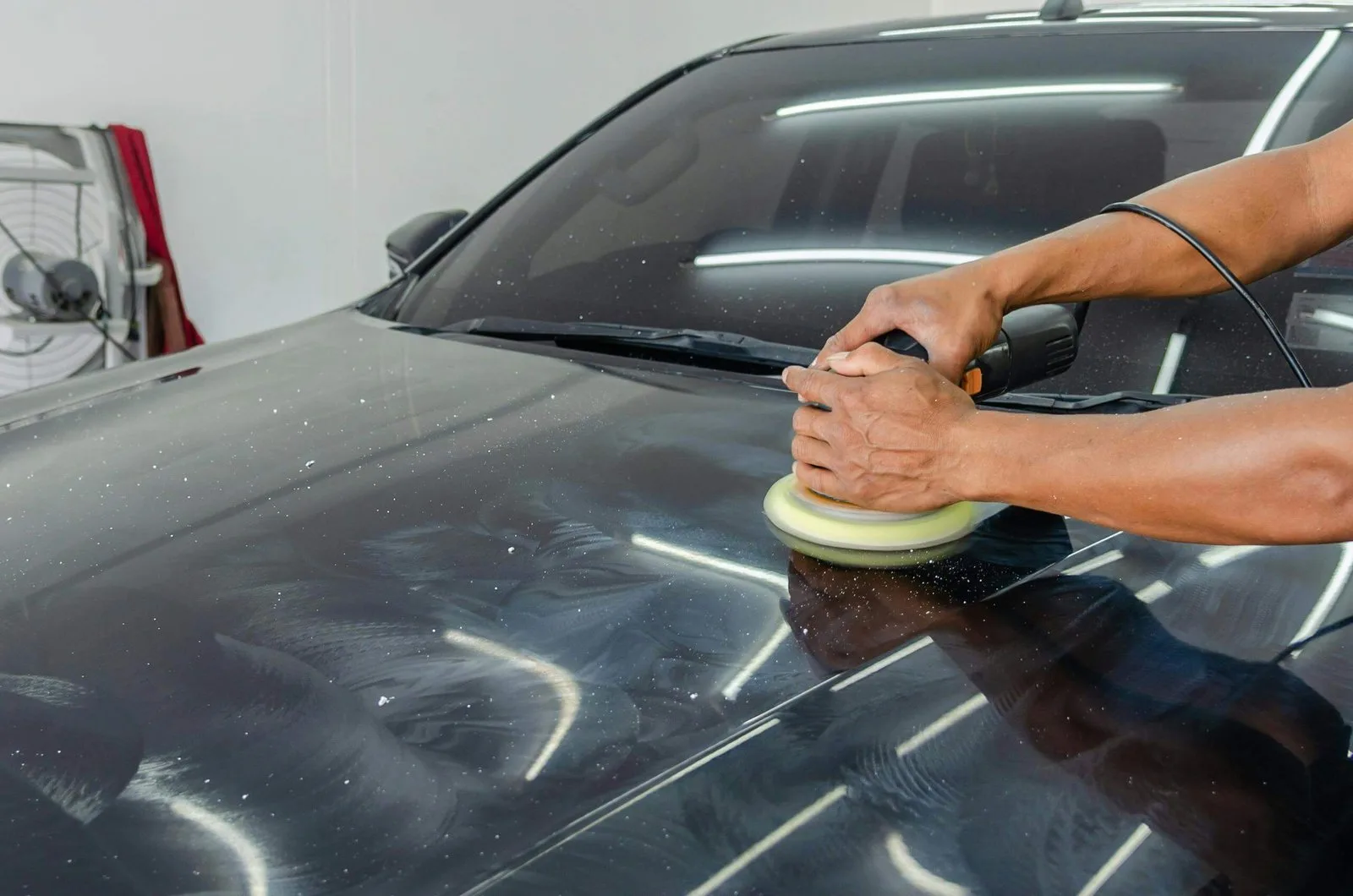
Graduated sanding
We remove the cloudy layer and scratches using progressively finer grades.
-
04
Polishing
We bring the lens back to a clear finish.
-
05
UV protection
We apply a protective layer to the cleaned lens.
That fifth step is what separates restoration from plain polishing. If the lens is only polished, bare plastic is left without protection — and since it's now more exposed than before, it yellows faster than it did before the treatment. Only the final UV protection makes the result last.
After restoration it's also worth checking the headlight beam adjustment. We don't carry that out ourselves, but we'll tell you if it looks like it's needed.
// price
Cost of headlight restoration
There's no single price, because headlights aren't comparable from one vehicle to the next. The price depends on:
| Factor | Why it matters |
|---|---|
| Degree of wear | A slightly cloudy lens needs fewer sanding stages than a heavily yellowed one |
| Size and shape of the headlight | The large headlights on modern vehicles have significantly more surface area |
| Depth of the scratches | Deeper scratches require more material to be removed |
| Accessibility | On some vehicles the headlight needs to be removed for a quality result |
| One headlight or a pair | A pair is restored in a single session |
Send us a photo of your headlights, or stop by — the estimate is free. At the same time, we'll tell you what matters more than the price: whether restoration actually makes sense in your case, or whether it's damage that won't respond to it.
One thing is almost always true: when the lens is only worn, restoration is significantly cheaper than replacing the headlight.
What about polishing headlights at home?
It's a common question, so here's the honest answer.
With toothpaste or a polishing compound, you really can partly remove the cloudy layer, and the difference will be immediately visible. The problem is what comes next.
Sanding and polishing also remove what's left of the factory UV coating. If you don't apply new protection afterwards, the polycarbonate is left directly exposed to the sun — and it yellows again, often faster than the first time. That's why a home job typically lasts a few weeks to a few months, after which you have to start over, each time with a little less material left on the lens.
So the difference isn't in the polishing. The difference is in the final protective coating.
How long it takes, and how long it lasts
How long the job takes depends on the degree of wear and whether the headlight needs to be removed. We'll give you a timeframe at the inspection — that's when we can see how much work is actually needed.
How long the result lasts mainly depends on sun exposure. A vehicle that sits outside on the coast all year will wear through the protection sooner than one kept in a garage.
Safety in winter
From October onward, most of the drive home happens in the dark. Cloudy lenses aren't a cosmetic issue during this period — a scattered beam means a less visible road edge, a less visible pedestrian, and more strain on your eyes.
It's also worth remembering that a non-functioning bulb is a fail point at the technical inspection, so autumn is a practical time to check both at once — how well your lights work and the condition of the lenses.
// why choose us
Why Ekocar
// frequently asked
Questions about headlight restoration
It depends on the degree of wear, the size of the headlight and whether it needs to be removed. Send us a photo or stop by — the estimate is free. When the lens is only worn, restoration is significantly cheaper than replacing the headlight.
It depends on the degree of wear and how accessible the headlight is. We'll tell you at the inspection.
It mainly depends on sun exposure — a vehicle parked outside all year will wear through the protection sooner than one kept in a garage.
Polishing removes the cloudy layer, while restoration also includes a final UV protective coating. Without it the lens yellows again, often faster than before.
You'll partly remove the cloudiness, but along with it the remaining factory UV protection. Without new protection, the result only lasts a few weeks or months.
No. Moisture means the housing isn't sealed properly — in that case the headlight needs to be replaced, not restored.
Yes. A clear lens lets through significantly more light, and the beam is less scattered.
No. If we notice during restoration that an adjustment looks necessary, we'll tell you.
// area served
Clients from Izola, Piran and Portorož too
Our workshop is in Koper — bring your vehicle from Izola, Piran, Portorož or Ankaran too, the journey to us isn't far.
// you might also like