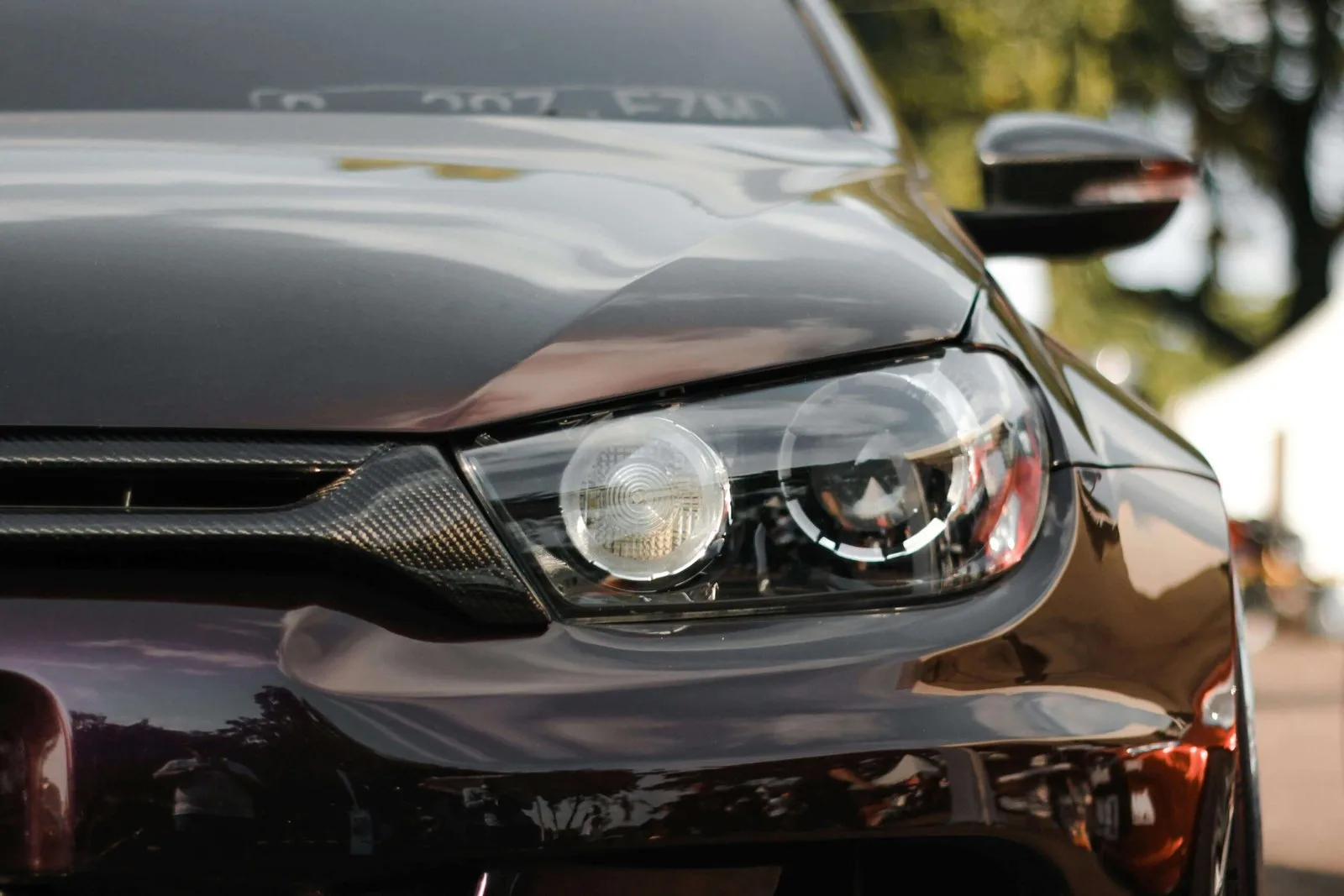
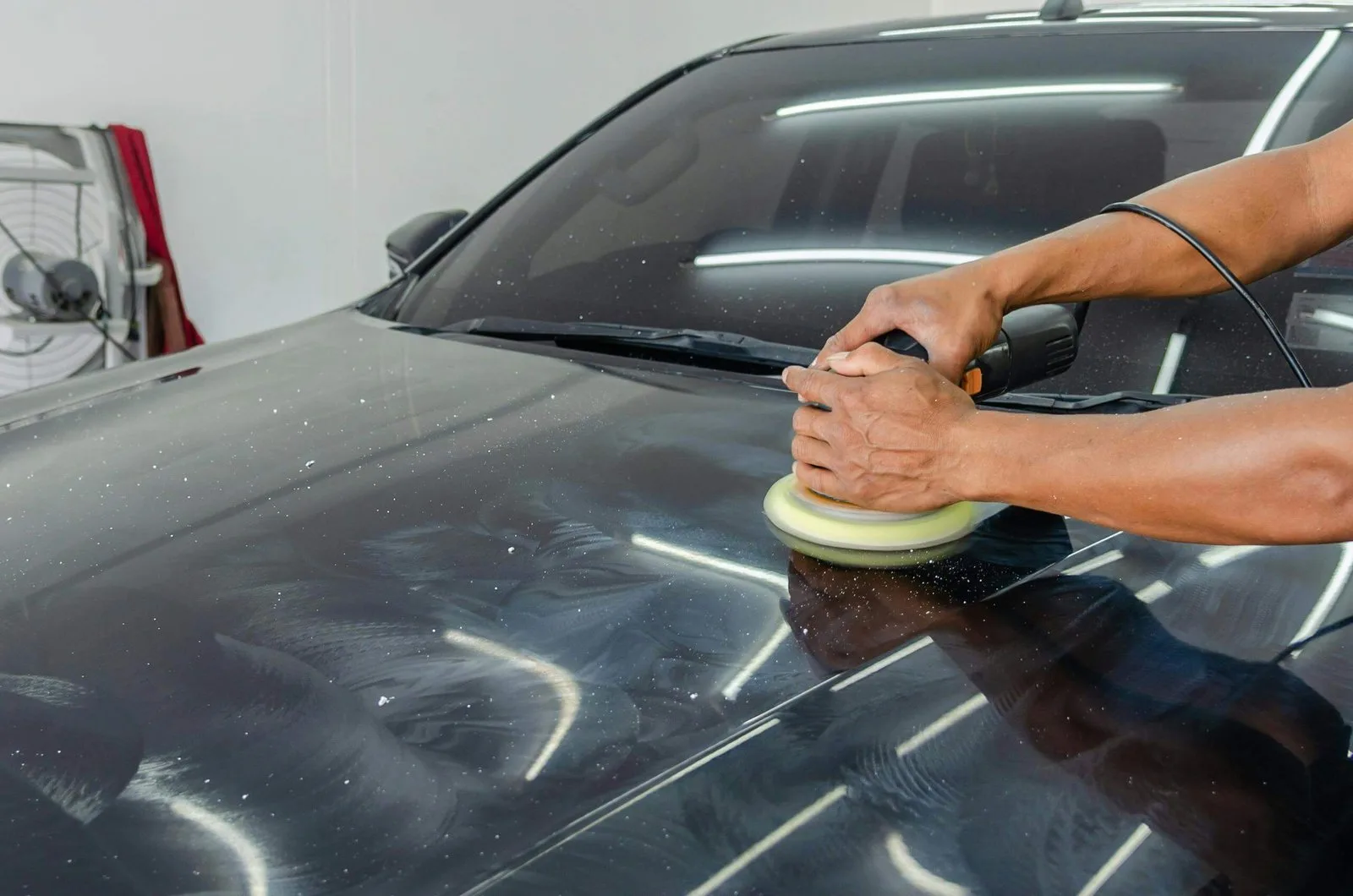
Polishing restores the depth and shine of your paint — removing swirl marks from washing, haziness, oxidation and water spotting. The result is paint that looks significantly better than a clean car, because the cause is fixed, not just the dirt.
It isn't magic, though. Some damage can't be fixed by polishing, and we'll tell you that up front, not afterwards.
What polishing fixes
- Swirl marks and holograms — fine circular scratches from washing, sponges and car washes, most visible in sunlight and on dark paint
- Haziness and oxidation — paint that has lost its depth and looks grey or dull
- Water spots — marks left by droplets that dried in the sun
- Shallow scratches that haven't broken through the clear coat
- Marks from spray, tree sap and insects that have etched into the paint
- Holograms from a previous poorly done polish
What polishing doesn't fix
- scratches that have broken through the clear coat down to the colour, primer or bare metal
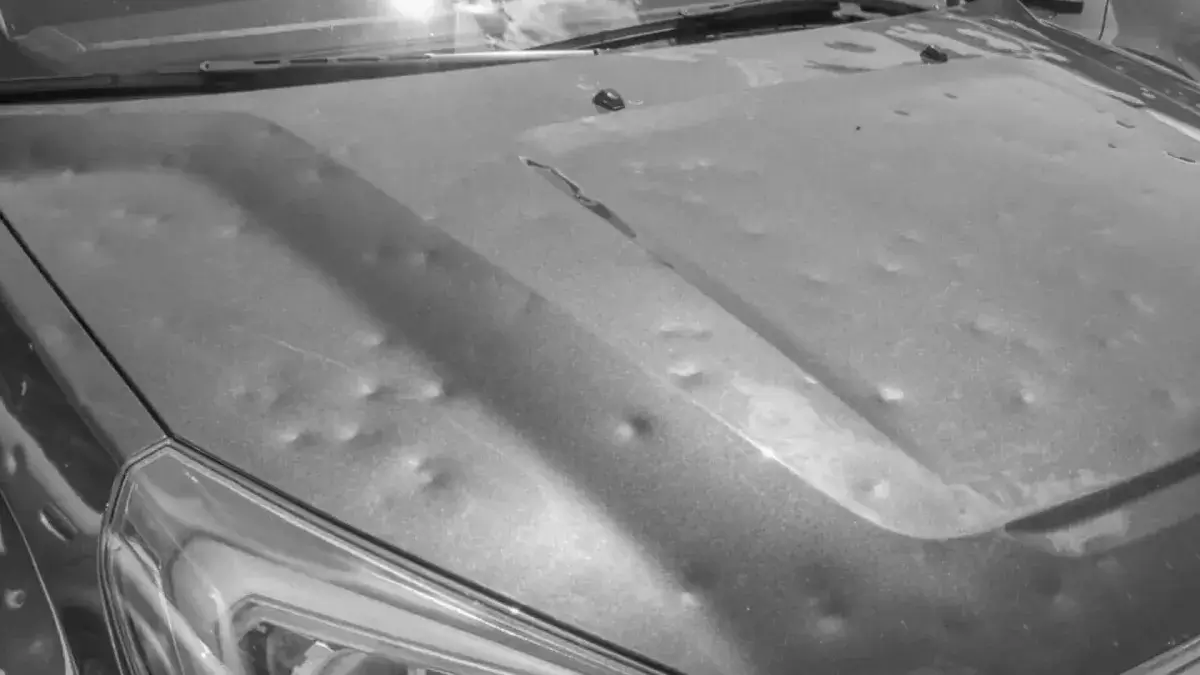
- dents and dings — these belong to auto body repair
- chipped paint and rust
- damage where the paint is cracked
In these cases the solution is painting, not polishing. If anyone promises to polish out a deep scratch, they're promising something that isn't achievable.
A simple test at home: run your fingernail across the scratch at a right angle. If your nail doesn't catch, the scratch is most likely in the clear coat and can be polished out. If it does catch, it's broken through the paint and will need repainting.
How polishing works
The clear coat on a vehicle is a few tens of micrometres thick. Polishing removes an extremely thin layer of it, levelling the edges of the scratches so they no longer scatter light — the scratch isn't filled in, it's smoothed away.
Two things follow from this: polishing can't be repeated indefinitely — there's a finite amount of material, so we never work more aggressively than needed for the result, and on an older or previously polished vehicle we check this first. And polishing removes any existing protection — wax or sealant on the paint comes off along with the scratches, so new protection needs to be applied afterwards. Without it, the fresh paint is more exposed than before.
Professional approach. Skilfully and well done. Trustworthy. Recommended.Nataša Cergol Žagar, Google review
// our process
How polishing works, step by step
-
01
Paint inspection
We assess the type of damage and the condition of the paint, and measure the thickness if needed.
-
02
Washing and degreasing
Any grain of sand left on the surface creates a new scratch during polishing.
-
03
Decontamination
We remove embedded particles, tree sap and industrial fallout.
-
04
Polishing
Depending on the condition of the paint, either single-stage (shine refresh) or two-stage (scratch correction, then a final polish for depth).
-
05
Protection
Applying a protective layer so the result lasts.
-
06
Inspection
We check the surface under different lighting — flaws only show up at the right angle.
Polishing on the coast
Vehicles here face a specific combination of stresses: salt in the air, strong sun, and water spots from droplets that dry in the sun before anyone wipes them off.
Water spots are particularly stubborn — if left long enough, they etch into the clear coat and a normal wash can no longer remove them. At that point they can only be fixed by polishing, and the sooner it's done, the less material needs to be removed.
When polishing is most worth it
- Before selling a vehicle. Of all the things you can do to a vehicle's appearance, polishing changes the first impression the most relative to the money spent.
- After winter. Salt, sand and winter washing leave swirl marks behind.
- After a bodywork repair, so the repaired panel blends in with the rest of the vehicle.
- On a new vehicle. Even new vehicles often arrive with scratches from transport and the dealer's initial prep.
// price
Cost of polishing
There's no single price, because two vehicles of the same size can be in completely different condition. The price depends on:
| Factor | Why it matters |
|---|---|
| Size of the vehicle | The surface area that needs treating |
| Condition of the paint | A shine refresh is a different job from correcting swirl marks |
| Single-stage or two-stage | The two-stage process takes significantly more work |
| Paint colour | Flaws are much more visible on dark paint, so the bar is higher |
| Condition before the job | Heavily neglected paint needs longer prep and decontamination |
| Type of protection | The final protective layer varies in durability and price |
Send us a few photos taken in sunlight, or stop by — the estimate is free. At the inspection we'll also tell you whether single-stage or two-stage polishing makes sense for your paint; often the first is enough.
Paint protection after polishing
After every polish we finish by applying wax — protection that gives the paint back a warm, deep shine and guards it against sun, salt and weather until the next polish.
// why choose us
Why Ekocar
// frequently asked
Questions about polishing
Those that haven't broken through the clear coat, yes. Deeper scratches need to be repainted.
Run your fingernail across it at a right angle. If your nail doesn't catch, the scratch is most likely in the clear coat and can be removed by polishing.
Not when done correctly. An extremely thin layer of clear coat is removed, which is why polishing shouldn't be repeated more often than necessary. On older or previously polished vehicles, we check the condition of the paint beforehand.
Less often than most people think. Once a year is generally more than enough for a normally maintained vehicle, and often a refresh every few years is enough.
Yes. Polishing also removes any existing protection, so we apply a new protective layer at the end.
Yes. New vehicles often arrive with scratches from transport and initial dealer prep.
It depends on the size of the vehicle, the condition of the paint and the process chosen. Send us photos or stop by — the estimate is free.
// area served
Clients from Izola, Piran and Portorož too
Our workshop is in Koper — bring your vehicle from Izola, Piran, Portorož or Ankaran too, the journey to us isn't far.
// you might also like