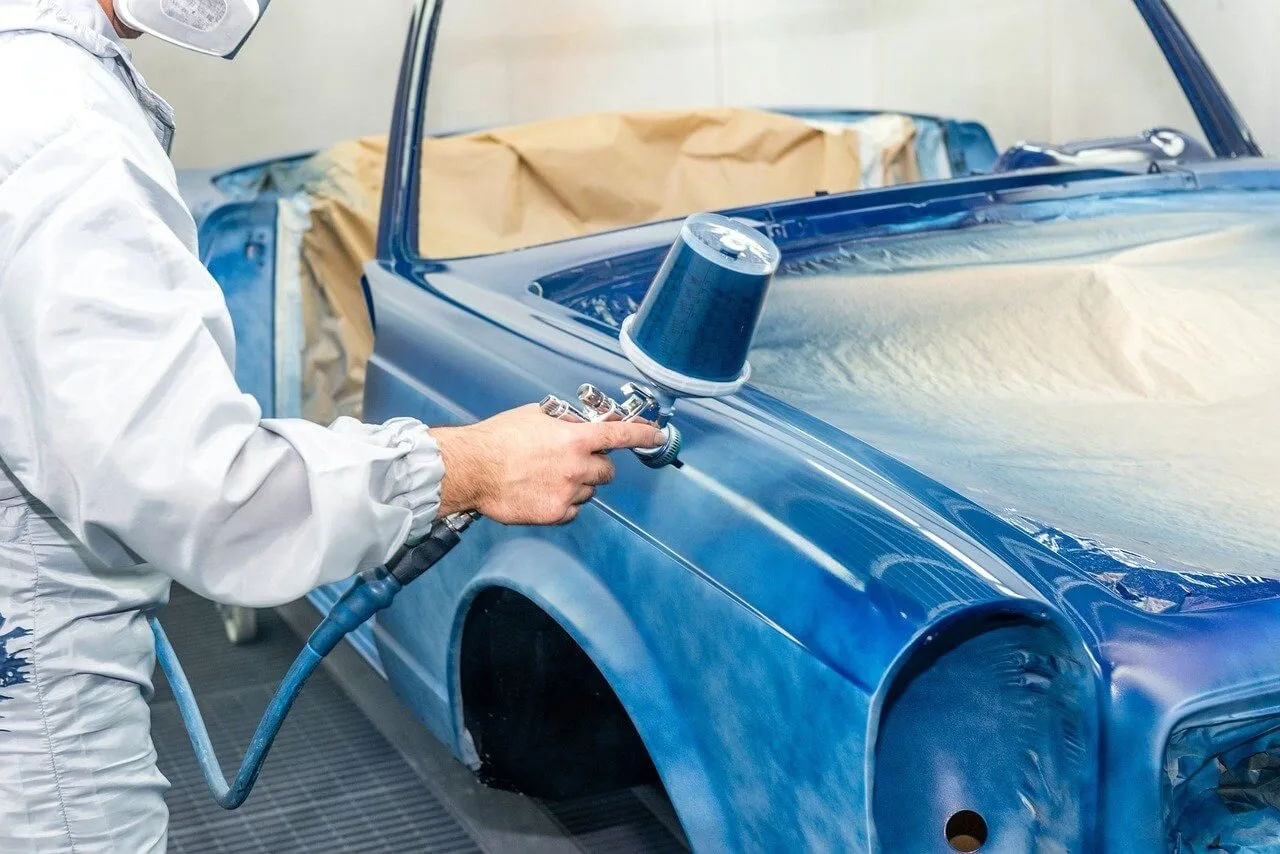
Auto Painting
Painting of individual parts or the whole vehicle — we match the shade to the factory code and the paint's actual condition.
We paint individual parts and entire vehicles — from a bumper after a parking knock to a full paint restoration. Our paint shop is in Koper, and we've been working on the coast for over 25 years.
With painting there's no halfway: the colour either matches or it shows. That's why we never determine the shade from the factory code alone — we match it to the actual condition of the paint on your vehicle.
Outstanding service, professional handling, more than I expected. Highly recommended.Špela Bertok, Google review
// what we paint
Individual parts and entire vehicles
Individual parts
- Bumpers — front and rear, including plastic ones
- Fenders, doors, bonnet, tailgate
- Side panels, sills, roof rails
- Mirrors, handles, trim strips
The whole vehicle
- Full-vehicle paint restoration
- Repainting in a different colour
- Preparing a vehicle for sale
After a bodywork repair
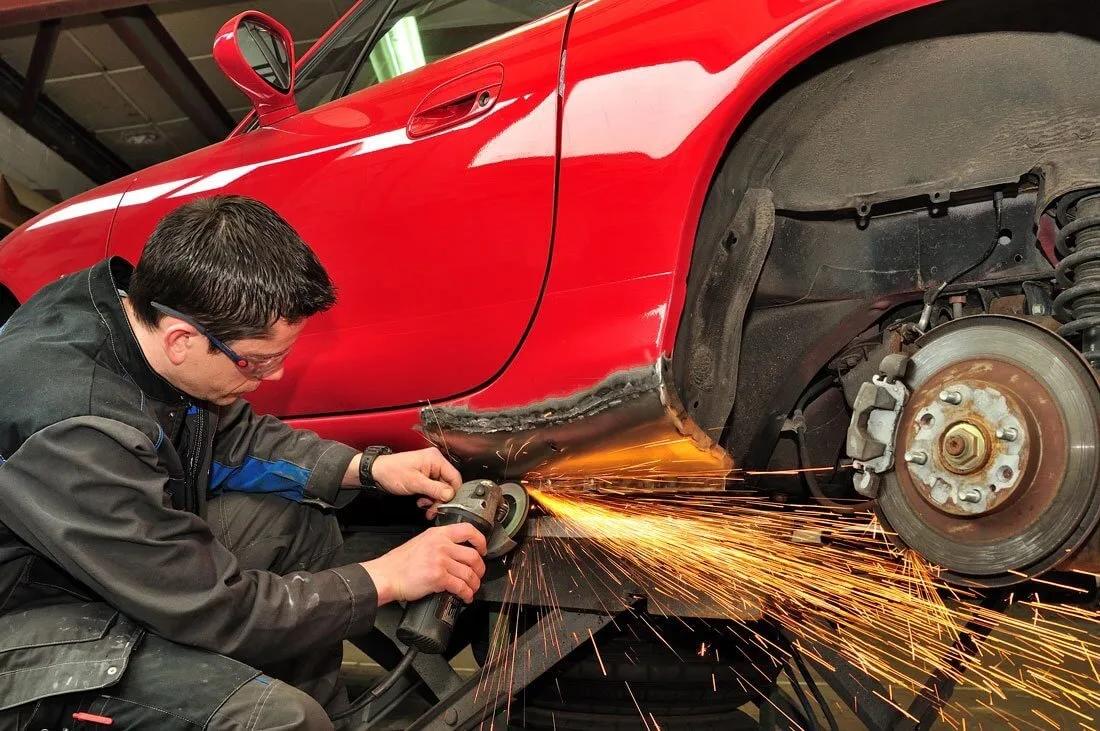
- Painting parts after auto body repair
- Repairing scratches and scrapes where the paint has been broken through
- Restoring paint damaged by stone chips, road salt or UV exposure
Vehicles on the coast are exposed to salty air all year round, which puts more strain on the paint and panel edges than further inland. That's why, when restoring paint, we pay particular attention to door edges, sills and seams — the places where corrosion starts first.
// precision
How we determine the right colour
This is the part that separates good painting from average.
1. Paint code, not the description in your registration
Your vehicle registration only lists a general colour name, such as white or red. There are dozens of factory whites, and they differ noticeably from one another. We need the factory paint code, which determines the mixing recipe — the sticker with the code is found in the boot, on a door pillar, or under the bonnet, depending on the make. If you can't find it, we can look it up using the chassis number.
2. The code alone isn't enough
Paint changes with age. Sun, washing and salty air shift the shade, so a ten-year-old vehicle is no longer exactly the colour it was when it left the factory. That's why, before painting, we prepare a test sample and compare it on the vehicle itself, not on a screen or a colour card.
3. Blending into adjacent parts
With metallics and three-layer paints — pearl whites, some reds — the shade never matches one hundred percent at a sharp edge. The solution is blending: we extend the paint onto the adjoining part so the transition isn't visible. This is necessary for some colours and not for others; we'll tell you what your vehicle needs and why.
// our process
How painting works
-
01
Assessment and paint code identification
We inspect the vehicle and determine the factory paint code.
-
02
Surface preparation
Sanding, levelling, filling. This is where the final result is decided: even the best paint shows on a poorly prepared surface.
-
03
Primer
Preparing the surface for the paint coat.
-
04
Mixing the paint and test sample
Comparison on the vehicle, with recipe correction if needed.
-
05
Spraying in the paint booth
Colour coat and clear lacquer, in a dust-free space with controlled temperature.
-
06
Drying
Controlled drying before further processing.
-
07
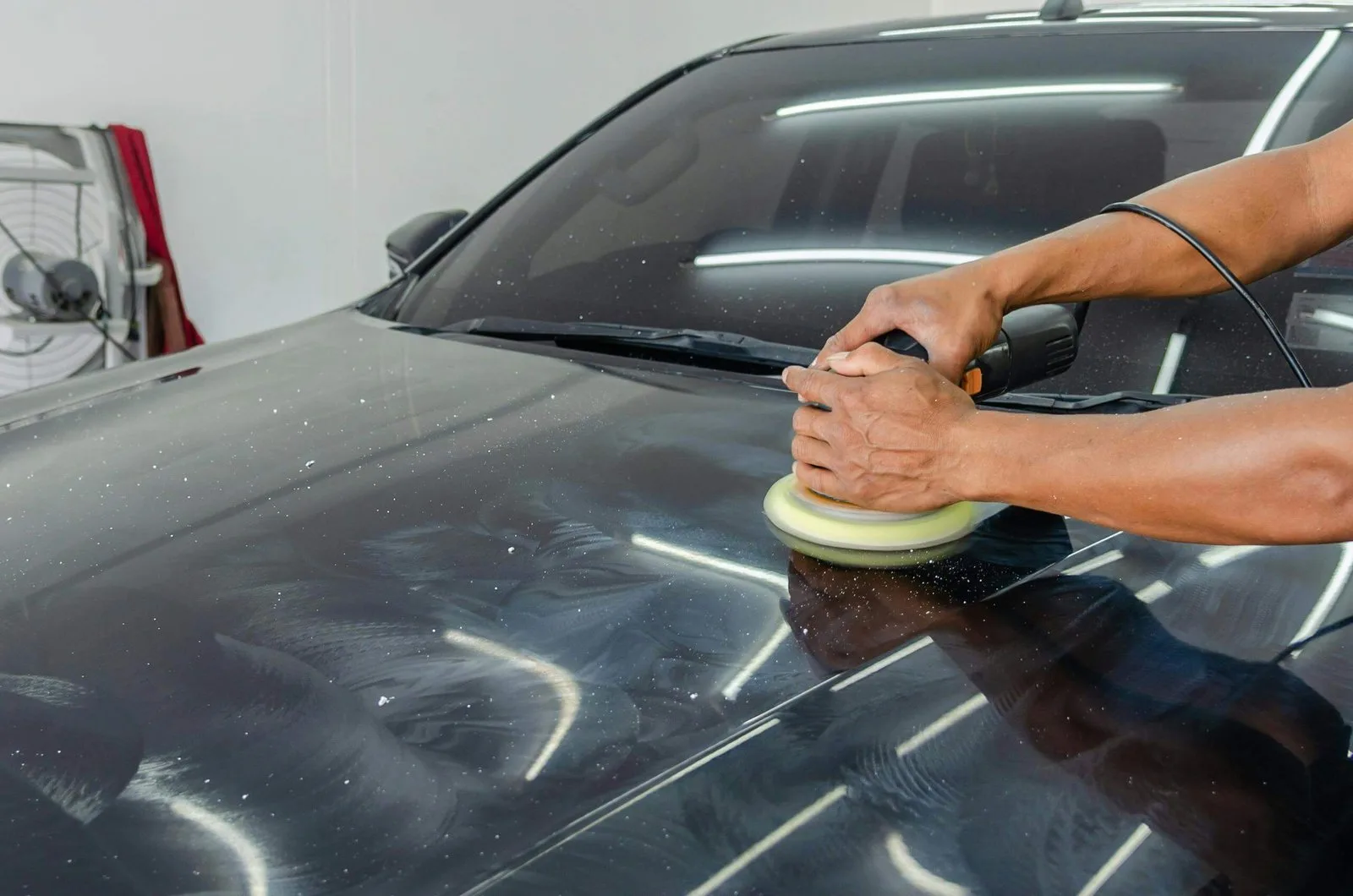
Polishing and inspection
We inspect the surface under different lighting, since shade deviations only show up in direct sunlight.
-
08
Reassembly and handover
You'll pick up your vehicle washed and ready.
How long your vehicle will be with us
Painting has stages that can't be rushed — preparation, drying between coats, lacquer curing. On top of that, the timeframe depends on the scope of work, how demanding the colour is, and how busy the paint shop is.
That's why we don't promise a deadline over the phone. We give it to you once the estimate is confirmed — and if anything changes, we call you before the deadline passes.
// price
Cost of painting
The price depends mainly on whether it's individual parts or the whole vehicle — and on how much work the preparation takes, not just the painting itself.
| Factor | Why it matters |
|---|---|
| Number of parts | The price per part drops when several parts are painted at once |
| Condition of the surface | A scratch in the paint is a different job from a dent that first needs levelling |
| Type of paint | Three-layer paints, pearls and some metallics need more work and pricier material |
| Blending | A seamless transition often requires including an adjoining part |
| Plastic or sheet metal | Plastic parts need different preparation and a different primer |
| Disassembly | Some parts need to be removed, not just masked off, for a quality result |
From photos we can give you a rough idea, but for an exact figure we need to see the vehicle. A photo can't show the depth of a scratch or the condition of the surface underneath the paint, and a guess given over the phone is often too low — which doesn't help anyone. The inspection is free.
// a fair question
What about a home spray-paint job or a cheap offer abroad?
It's a common question, so we answer it honestly.
For a small surface scratch that hasn't broken through the paint, a touch-up pen or polishing is often genuinely enough. We won't talk you out of that.
For everything else, the result isn't decided by the paint itself but by three things that a home job or a cheap spray booth can't replace: surface preparation, a dust-free space and controlled drying. That's why cheap paint jobs only show their true colours later — a shade that looks different in the sun, grain in the paint, edges that start to lift.
With cheaper offers abroad, it's also worth factoring in the travel, the time, and the fact that there's practically no recourse if something's wrong. Our work comes with a guarantee, and our workshop is in Koper — if anything isn't right, you bring the vehicle back.
// insurance companies
Painting through your insurance
We work with Triglav, Sava, Generali, Groupama and others.
If the damage is covered by insurance, we handle the claim, the estimate and the paperwork for you. More on the process: insurance claims.
Courtesy car. If it's included in your insurance package, your insurer provides one. If not, our courtesy car is free — you only pay for the fuel you use. More about the courtesy car.
// why choose us
Why Ekocar
// frequently asked
Questions about auto painting
Yes. We determine the shade from the factory code, then match it to the actual condition of the paint on your vehicle — paint changes with age. Before painting we prepare a test sample and compare it on the vehicle itself.
On a sticker whose location depends on the make — in the boot, on a door pillar, or under the bonnet. The colour name in your vehicle registration isn't enough for painting. If you can't find the code, we can look it up using the chassis number.
Yes — bumpers, fenders, doors, bonnet. Painting a single part is often the most sensible solution after a parking knock.
Yes. Plastic requires different preparation and a different primer than sheet metal.
It depends on the scope, the type of paint and how busy the paint shop is. The drying and curing stages can't be shortened. We give you a timeframe once the estimate is confirmed.
Yes. Keep in mind that a colour change also needs to be updated in your vehicle documents — check the procedure with your registration body or at the technical inspection.
Yes, we guarantee our work. Contact us for the exact duration.
We only carry out mechanical work when it's directly related to the bodywork — for example a shock absorber or radiator damaged in an accident. Our specialisation is bodywork and paint, so we don't perform standalone mechanical repairs such as engine part repair or replacement.
// area served
Clients from Izola, Piran and Portorož too
Our workshop is in Koper — bring your vehicle from Izola, Piran, Portorož or Ankaran too, the journey to us isn't far.
// you might also like